Copyright Termination vs. Loan-Out Companies

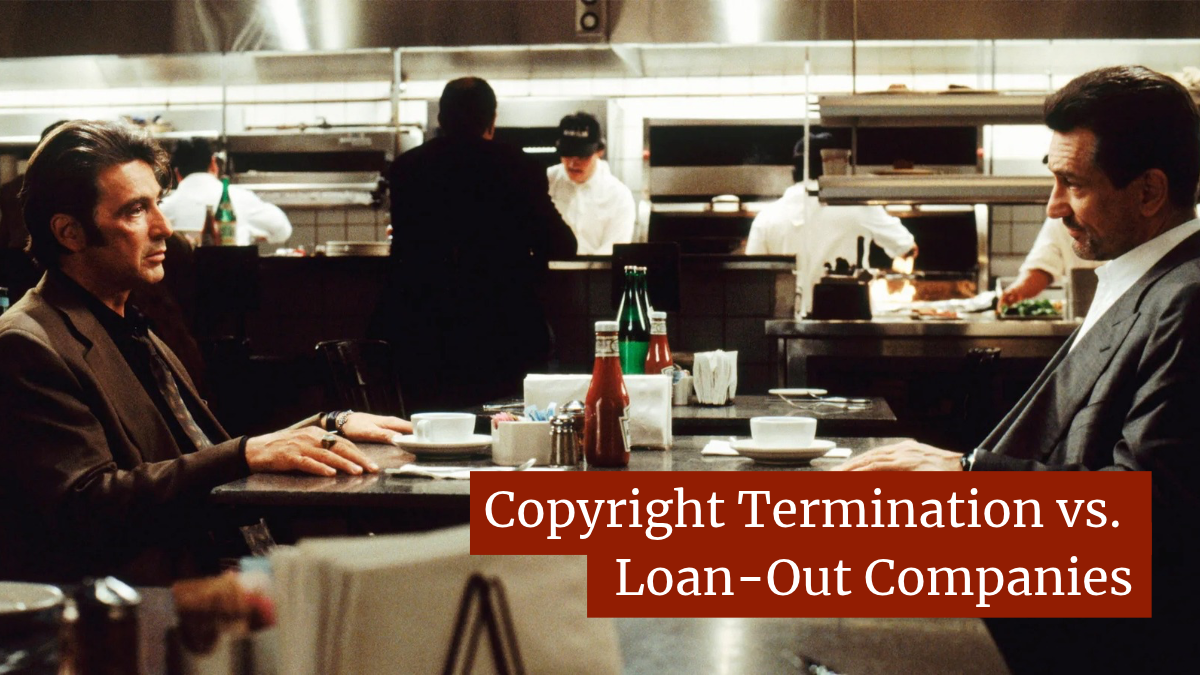
The acclaimed screenwriter, director and producer Michael Mann has a long list of movies and television shows to his name. One of the best known is the 1995 Heat, starring Robert De Niro and Al Pacino, in which Mann was the writer, director and producer.
Now, thirty years later, Mann is attempting to reclaim his rights to the film. Earlier this year, he filed a notice of copyright termination with New Regency Productions, the company that owns the rights to the film.
However, Regency has now filed a lawsuit against Mann, claiming that the copyright termination, as well as other notices he had filed, are invalid.
Their argument hinges on a common, but often controversial, practice in the entertainment industry. Namely, the use of a “loan-out corporation.”
To be clear, Mann isn’t the first creator to run into this problem nor is the problem particularly new. Aaron Moss, the author of Copyright Lately, said in a piece that he co-wrote with Kenneth Basin, that this was a “ticking time bomb” for the entertainment industry in 2012.
However, Mann’s situation may be the clearest example of the problem as it puts Mann at odds with himself as well as Regency Productions. This creates a bizarre situation where courts may have to decide whether Mann created the work as himself or whether he was an employee of his own company.
While it sounds ridiculous, the outcome of this case could have significant implications for other creators, in particular in Hollywood.
What is a Loan-Out Corporation?
To understand the implications of this case, you have to first understand what a loan-out corporation is.
A loan-out corporation is a company created by an individual that enters into agreements with other companies on behalf of the individual. Typically, the individual is both the owner and sole employee of the company, which then “loans out” the individual’s work to other companies.
In the case of Mann, he created the confusingly named Michael Mann Company, which is the entity that entered into the agreements with Regency Productions and others.
For the creator, there are many benefits to using a loan-out corporation. This includes the ability to shield personal assets from liability, tax benefits and the ability to expand the company if desired.
Ideally, this allows the creator to enjoy the benefits of being part of a corporation while also functioning as a sole creator. It’s a win-win for creators and other companies often prefer to work with a corporation than an individual directly.
However, as the Michael Mann case shows, it can also create a serious problem if you want to reclaim your rights to a work through copyright termination.
Understanding Copyright Termination
Copyright termination is something of a misnomer. It doesn’t actually terminate the copyright in a work, instead it terminates copyright transfers or exclusive licenses after a period of time.
The goal of copyright termination is to allow original creators to reclaim their rights after a set period of time, most commonly 35 years after a particular deal was made. This can be a boon for creators who signed away their rights when a work was first created only to have that work explode in value over time.
However, not all work qualifies for copyright termination. One of the most notable exceptions is works made for hire. These works include items created by an employee of a company as part of their employment as well as some, but not all, commissioned works.
Already, the problem becomes clear. If you are an employee of a loan-out corporation, even if you are the sole owner and employee of the company, your work may be legally consider a work made for hire and, accordingly ineligible for copyright termination.
According to Michael Mann’s previous filings, this is exactly what happened. The copyright registration for the script lists the author as “Michael Mann Company, Inc., employer for hire.”
Some might argue that the loan-out corporation is something of a fiction. That’s largely what Road House screenwriter R. Lance Hill is arguing in his copyright termination case over the film. However, Mann is taking a different approach.
Instead, he is arguing that he wrote multiple parts of the script before he hired himself as an employee of his own company. This has resulted in Mann filing additional copyright termination notices against two other loan-out corporations he owns (or owned), ZZY Inc. and Ajar Inc. This places him in the unique position of essentially filing a copyright termination notice against himself.
That, in turn, brings us back to the lawsuit filed by New Regency Productions.
Moving Forward
On the surface, all of this seems to be extremely silly. Regency even likened it to “a Shakespearean actor playing multiple parts.” While that may be true, loan-out corporations are ubiquitous in the entertainment industry, in particular in Hollywood.
Mann and Hill are far from the only people who have this or a similar arrangement. There are many other films and creators who could be affected by the outcome of this case.
That said, Mann likely has an uphill battle ahead of him. Judges are typically not sympathetic to litigants who enjoy the benefit of an arrangement, such as a loan-out corporation, but try to shield themselves from the drawbacks. Mann and others who use loan-out corporations enjoyed real benefits from the system, but are now arguing that they should also enjoy the benefits of being an individual.
But Mann also has a point. It’s widely known that the script for Heat was written over multiple decades. So there is an open question about how much of the script and the story was created by Mann the person or by Mann the company.
To put it bluntly, I do not envy the judge and/or jury who may have to rule on this if it’s not settled quickly.
Bottom Line
Interestingly, this lawsuit does not impact the upcoming sequel to Heat. Amazon, which is set to start production on the film in January, has reached deals with both Mann and New Regency Productions. From a legal perspective, the new film will not be affected by this dispute, though it may decide who gets what from the licensing deal.
Loan-out corporations have been a part of the entertainment industry for decades, dating back well before copyright termination became part of the law. To some degree, they have always been controversial, as recently as 2023 California passed a new law requiring greater transparency and accountability from such companies.
But now we are hitting a point where copyright termination is becoming more common. This has the potential to create a major problem for creators who use such companies. They will have to weigh the benefits of using a loan-out corporation, especially as scrutiny on the practice increases, versus the potential drawbacks, namely losing the ability to reclaim their rights.
Cases like this one may have a major impact on the future of the practice. That, in turn, could have a significant impact on the entertainment industry as a whole.
As such, as silly as cases like this one may seem, they are very important and well worth watching.
Want to Reuse or Republish this Content?
If you want to feature this article in your site, classroom or elsewhere, just let us know! We usually grant permission within 24 hours.