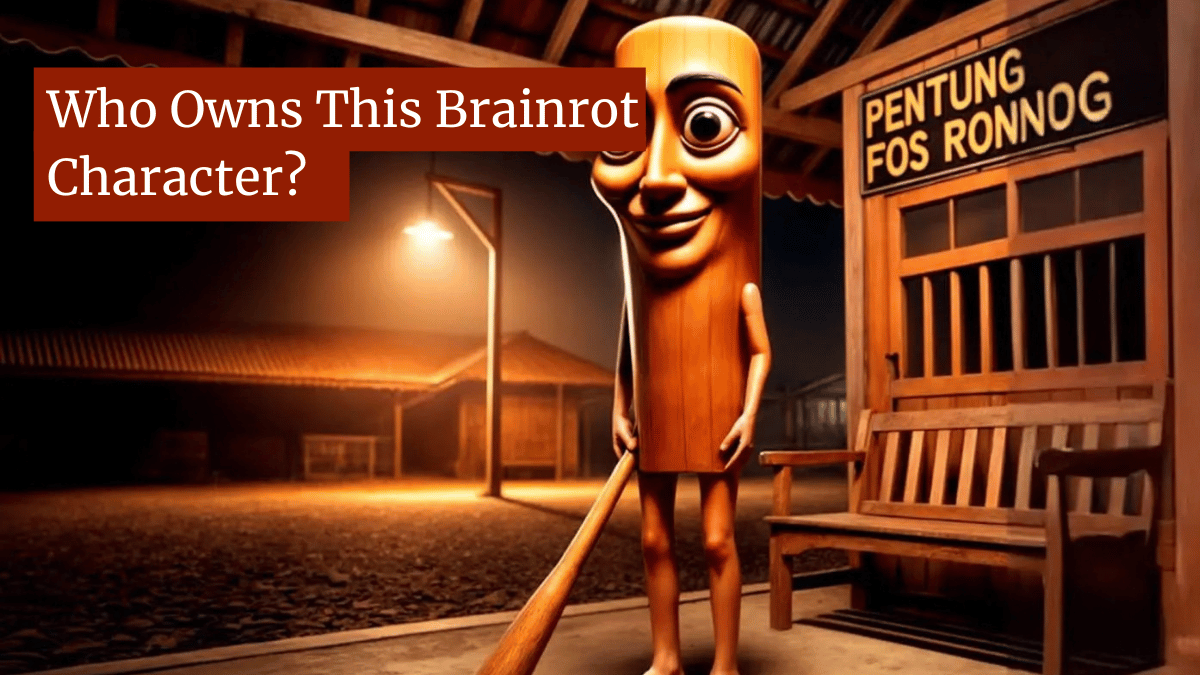
Who Owns This Brainrot Character?

The “Italian Brainrot” meme genre has become famous for its absurdist humor and dadaist style, often created using generative AI.
It’s been the genesis of such characters as Ballerina Cappuchina, a ballerina with a coffee cup for a head, and Saturno Saturnita, a planet Saturn featuring large human feet and a cow’s head.
For fans of the genre, the absurdism is the point. They revel is how nonsensical the genre is. However, as with anything that becomes popular, people seek to capitalize on the trend commercially.
One of the most famous examples of that in the brainrot genre is the Roblox game Steal a Brainrot. Widely considered the most popular game on the platform, Steal a Brainrot has surpassed 25 million concurrent users.
Developed by DoBig Studios and SpyderSammy, the game features players trying to steal brainrot characters from one another and features many of the most famous characters from the genre.
However, not all is well in the world of brainrot. A legal dispute has arisen over one of the genre’s most famous characters, Tung Tung Tung Sahur (Triple T) that’s pitted the character’s creator against the developers of Steal a Brainrot.
But, while it might be easy to dismiss this as a weird lawsuit only applicable to meme culture, it may actually have a much larger impact as it addresses the intersection of AI, copyright and trademark law.
A Brief History of the Brainrot Lawsuit
According to the creator’s website, Triple T was created in early 2025 by Fernanda Bagas Indrastata, an Indonesian creator who goes by the TikTok handle @noxaasht or simply as “Noxa.”
The character is based on Indonesian drum named a kentongan, which is used by Muslims during Ramadan to wake for pre-fasting meals. Tung references the sound of the kentongan makes and suhar is the name of the pre-dawn meal.
However, Noxa did not create the character whole cloth. Noxa used OpenAI’s DALL-E image generator to create the original image over seven prompts. Its first appearance was in a TikTok short, published in February 2025.
Since then, the character has gone on to be featured in a wide variety of Italian brainrot memes on nearly every imaginable platform, including an official video game licensed by Noxa.
In May 2025, Steal a Brainrot was released on Roblox. The game initially featured the Triple T character as one of the brainrot memes. In September, Mementum Lab, a company representing Noxa, sent a cease and desist letter to the game’s developers. The developers temporarily removed the character from the game.
Initially, the two sides attempted to negotiate a licensing agreement. However, the negotiations broke down and, in November 2025, Spydersammy and DoBig Studios restored the character to the game and filed a lawsuit against Mementum Lab.
Their main argument is that, since Noxa created the character using AI, he and his representatives are trying to claim ownership rights that don’t exist. As such, the lawsuit sought a declaratory judgment of non-infringement.
However, in April, shortly after Tung Tung Tung Sahur was featured in the video game Fortnite, Mementum filed a counterclaim, alleging both trademark infringement and unfair competition. Mementum has also filed a motion to dismiss the case on jurisdictional grounds.
The case is ongoing.
Whether you are a fan of this genre or not, this is a lawsuit that will be worth watching. The reasons is simple: It deals with the intersection of AI, meme culture and intellectual property law.
The Issues at Stake
The case raises a slew of interesting questions.
The most obvious is “Can Noxa even claim copyright ownership over the character?” As we’ve talked about in the past, the US Copyright Office has released a statement that AI‑generated content, generally, does not qualify for copyright protection. That’s because, for a work to qualify for copyright protection, it must have a human author.
However, Noxa argues that he added to the character through multiple prompts and iterations. That said, the US Copyright Office has said that the presence of human‑written prompts doesn’t change the lack of protection for AI‑generated content.
But even if Noxa can overcome that obstacle, there’s another issue. The vast majority of Tung Tung Tung Sahur’s content has been created by other people. The very nature of Triple T as a meme is that countless other people have contributed to it, releasing images, videos and even fan games.
So if Noxa can protect the character under copyright law, he would only own the elements that he created. What that does and does not include would be a question the court would have to answer. However, it could severely limit the scope of Noxa’s copyright protection.
This, in turn, is probably a big part of why Mementum and Noxa are arguing that the character is protected under trademark law. To be clear, you can register a character as a trademark and, with an officially-licensed game, he may have the required commercial use to do so. Furthermore a trademark registration has been filed with the US Patent and Trademark Office.
But as we’ve seen with Mickey Mouse, Winnie the Pooh and other trademarked characters that have had their copyrights expire, trademark law is not a substitute for copyright protection. Courts have been very clear that you can’t use trademark protection, to enforce an expired (or lack of) copyright.
But the trademark element may help Noxa in other ways. Even if there’s no copyright protection for the character, there may be trademark protection in the name. That’s because, unlike copyright law, you can enforce trademark rights in a name or title.
Does that mean that Noxa and Mementum will come out victorious? There’s no way to know. But there’s plenty of reasons to keep an eye on this case as it unfolds.
Bottom Line
This case isn’t just entering uncharted waters, it’s entering the confluence of three uncharted oceans. There’s enough open questions here to give any IP watcher a headache. Between the use of AI, the nature of meme culture, and the overlap between copyright and trademark law, there is a lot to unpack in this case.
Personally, I think that Noxa and Mementum have their work cut out for them, especially if the case stays in the United States. Their best chance, most likely, is the trademark arguments. Since they have definitely used the character in commerce and a trademark registration has been filed, they may be able to make a decent argument along those lines.
However, what the extent of that protection would be is unclear. As untested as the overlap between copyright and AI is, AI and trademark law is even more so.
So even though characters like Tung Tung Tung Sahur may not be intended to be taken seriously, there are still a lot of reasons to take this case seriously. Between the legal issues raised and the money involved, there is plenty at stake.
This will be a case to watch. Even if the subject matter is completely absurd.
Want to Reuse or Republish this Content?
If you want to feature this article in your site, classroom or elsewhere, just let us know! We usually grant permission within 24 hours.