What Went Wrong with Blizzard’s Fan Contest
On October 16, Blizzard Entertainment, the developers of the popular video game Overwatch, announced the winners of the second “If the Crisis Had Never Happened” fan‑skin design contest.
The contest featured a prize of 20,000 yuan ($3,000) and the promise that the winning designs would be considered for inclusion in the game.
With the stakes so high, one would think that Blizzard would carefully vet the submissions to ensure that they comply with the rules of the contest. However, no sooner were the winners announced than allegations of AI usage, plagiarism, and self‑plagiarism began to surface.
The result has been outrage in much of the Overwatch community, in particular, in China. It has also raised serious questions about the way that Blizzard chose the winners and their vetting process for entrants.
More importantly, it is also a wake‑up call for those hosting similar contests. These are issues that will come up, but they are also at least partially preventable if you prepare for them in advance.
What Happened?
Disclosure: Automatic translation tools were used to research this article.
As the name “If the Crisis Had Never Happened” suggests, the contest was meant to allow fans of the game to design Overwatch skins that they might wear if the in‑game events never happened.
It’s the second such contest that Blizzard has run and is exclusive to the China server. However, Overwatch fans around the world were watching the contest closely.
Blizzard announced the winners on October 16. The first domino to fall was that of the third‑place winners, Animal Maid Café, which was criticized for allegedly being AI‑generated.
This entry was ultimately disqualified. In an official statement, Blizzard said that the entry was removed: “After verification and careful evaluation, we have determined that the creation method used for this entry does not comply with the guidelines set forth for this contest. As a result, we have decided to revoke this entry’s award.”
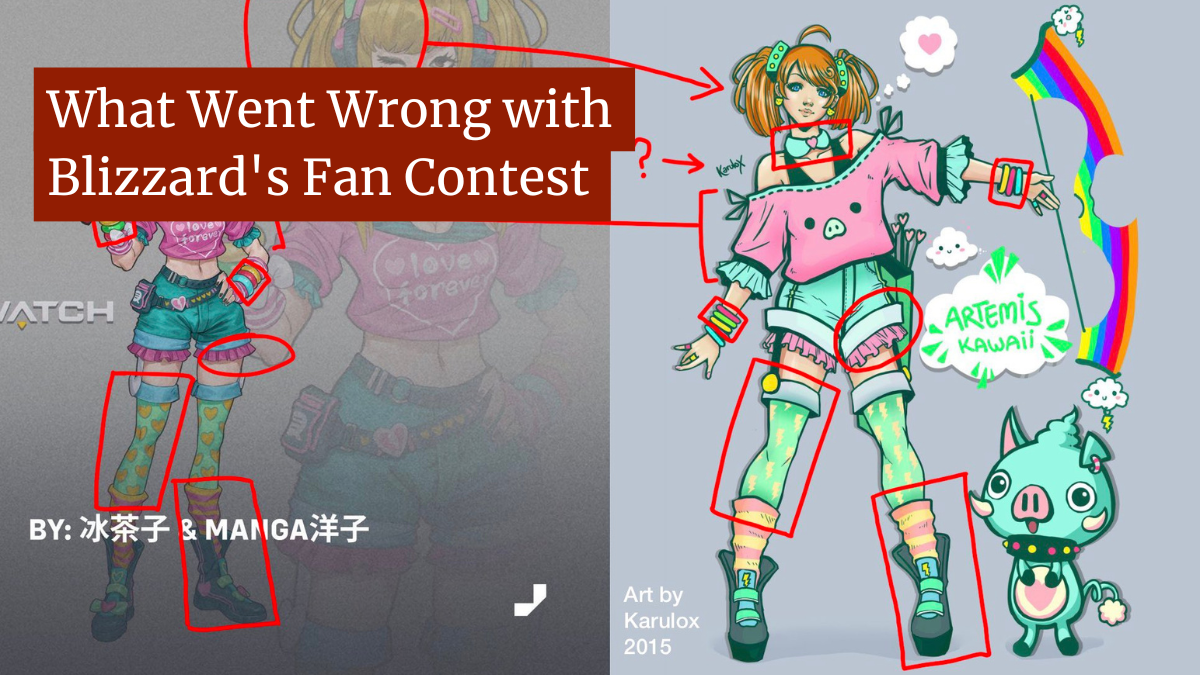
However, the controversies didn’t stop there. A second‑place winner, entitled “Funeral of Love D.Va” skin, was accused by the Colombian artist Karulox of plagiarizing their 2015 design. These allegations drew a great deal of attention, with many reporting the issue to the contest’s organizers.
Though no official announcement has been made, a Reddit post indicates that the entry has been removed.
Then another third‑place winner, “Ana: Silver Gift,” was accused of being a reused design. Fans claimed that the work resembled a skin the creator had submitted to a fan‑run contest in May of this year. The creator of the skin claimed that they had refined and improved the design for this contest.
However, the contest rules made it clear that submissions needed to be original work for this contest. Many felt that the skin violated those rules.
But, as of this writing, there has been no official statement about this entry and, according to a Reddit post, it has been moved up to second place.
This all raises a simple question: what, if anything, could Blizzard have done to prevent this from happening?
Preventing the Problem
When it comes to the anger directed at Blizzard, fans are generally upset at two things. First, they’re upset at the contest’s vetting process, or lack thereof. Second, they’re upset at how the contest was scored, with the fan vote making up just 10 % of the final score.
Both complaints have at least some merit.
On the vetting side, it’s clear that Blizzard was relatively relaxed about its vetting, at least of the second and third‑place entries. These issues of AI usage, plagiarism and self‑plagiarism are all very predictable.
We are nearing the four‑year anniversary of widespread availability of generative AI. No one, let alone a major video‑game developer like Blizzard, should be caught flat‑footed on this issue. Plagiarism and self‑plagiarism issues have been around for as long as there has been creativity to plagiarize. These were easily predictable issues.
However, it’s unclear what, if anything, Blizzard did to vet these entries. If fans could easily spot the AI usage, they likely could have too. The same could be said about the plagiarism and self‑plagiarism issues.
Blizzard could have, and perhaps should have, required more documentation from the contestants, including drafts, layered art files, and other documentation of the creation process. While that is already more work for contestants who are, in essence, already providing free labor, it would greatly reduce the post‑announcement controversies.
To be clear, no one can prevent 100 % of these kinds of issues. But they can be reduced and mitigated. That, to me, is what is most striking about this story. The issue isn’t that an AI‑generated entry slipped through the cracks; it’s that Blizzard seemed completely caught off‑guard by the issue.
If companies are going to hold these kinds of contests, they need to plan for the inevitable event of users submitting AI‑generated, plagiarized and otherwise non‑original entries. This isn’t something that can be waived. It is a reality of holding such events in this day and age.
Bottom Line
It’s easy to dismiss it as just a silly fan contest with no real stakes. However, it’s important to remember not only did this contest have a significant cash prize, but the winner may have their design featured in the game itself.
There’s a lot at stake here for Blizzard beyond the bad publicity. But that does lead to the next point: what about the actual winner?
There have been no allegations of any kind against the first‑prize winner. I think that may be very telling, as Blizzard may have focused its vetting and attention on the first‑place winner and largely ignored the rest of the winning entries.
While that makes sense from a pure‑efficiency standpoint, it ignores the significant publicity and other issues that come from several of the other winning entries having such clear issues.
In the end, this case is a reminder that if you hold a contest like this, you need to be prepared to deal with AI‑generated entries, plagiarized entries and other non‑original work. Simply putting those things in your contest rules is not enough.
Though no system is perfect, there are ways to mitigate these issues; they just require advance planning and a willingness to vet the work that comes in.
Want to Reuse or Republish this Content?
If you want to feature this article in your site, classroom or elsewhere, just let us know! We usually grant permission within 24 hours.