
Stella Lefty Faces Five Plagiarism Allegations
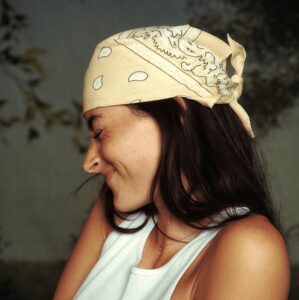
In March 2026, Stella Lefty released her hit single Boston, reaching number 2 on the US Billboard Hot 100 chart.
Though she had been writing and publishing her own music on social media for years, this song rocketed her into stardom and made her a household name. This made her August 2026 album, Long Way Home, a major success, rising to number 11 in the US Billboard chart and seeing similar success in Australia, Ireland and New Zealand.
However, with that meteoric rise to fame came a new level of scrutiny. Listeners began comparing her music to that or earlier works and found similarities that they simply could not ignore.
So far, five of the 14 songs on Long Way Home have been accused of plagiarism and two of them have already seen those claims settled.
While this could be dismissed as another example of a new artist borrowing too much from their predecessors, it begs the question of why wants have been so eager to jump on these similarities. It also highlights one of the more unusual ways of addressing citation issues, namely the retroactive songwriting credit.
However, to understand that, we first have to go through the allegations themselves.
Understanding the Allegations
As of this writing, there are five songs on the album that have been accused of plagiarism in various ways. The are, in order of the allegations:
- Boston – Listeners noted that Lefty’s major hit had similarities with Noah Kahan’s 2022 song Stick Season.
- Summer You Were Mine – Was compared to The Chick’s 1998 song There’s Your Trouble.
- Why Wouldn’t We – Has been compared to the 2017 Blake Shelton song I’ll Name the Dogs.
- Misery – Has been compared to A Million Dreams, a 2017 song that was part of The Greatest Showman soundtrack. (Note: This is off her 2025 EP Tragic, Really)
- Something to Lose – Chris Cresswell at Syracuse.com claimed that the song’s opening chords were similar to Jason Isbell’s 2015 song Children of Children.
Of the five allegations, the first two have already been resolved. Kahan is now listed as a co-author on Boston. Lefty denied intentionally copying the song, but users found early TikTok’s of Lefty covering it. The second was an approved interpolation, which is where a musician takes an existing part of a song and alters it rather than sampling it. According to Lefty, the original songwriters were omitted due to an error.
The third and fourth allegations, however, are still ongoing. None of the artists or songwriters involved have addressed the allegations. The fifth allegation is brand new, literally being made over the holiday weekend. It is also unclear if Cresswell was making a serious allegation or just an observation about similarities between the two songs.
But this all begs a simple question: Why are listeners so eager to find plagiarism in her work? Though some of this can be attributed to her rapid rise to fame, there’s another factor at play: Allegations of nepotism.
Allegations of Nepotism
Stella Lefty’s birth name is Stella Lefkofsky. She is the daughter of Eric Lefkofsky, the founder of Groupon and the current CEO of Tempus AI. His fortune is estimated at $4.8 billion.
To be clear, as many have pointed out, the technical definition of nepotism doesn’t fit Lefty’s story. Though her family is very wealthy, they have no connection to the music industry. There’s also no evidence that her family played any major role in her career.
Despite that, she’s been widely accused of being an “industry plant.” However, this term has been applied to many musicians who had what appeared to be a sudden rise to fame. However, as many noted, Lefty started publishing music on TikTok in the early 2020s and, initially, received almost no attention.
Still, the allegations have largely stuck. That kind of scrutiny brings people who want to see her fail. To that end, it can be characterized as another form of the weaponization of plagiarism.
But there’s a real problem with that argument. The first two allegations were valid, or at least valid enough to warrant some correction. It’s difficult to say she hasn’t committed any plagiarism when she’s already been forced to correct the record on two of her songs.
So while the nepotism allegations may explain the scrutiny, they don’t explain the outcome.
Bottom Line
What I find most disturbing about this story is Lefty’s response to the initial allegations. She said, “When I was writing the song, I wasn’t thinking about Noah Kahan. I was literally thinking about nothing at all. I don’t want to step on anybody’s toes, so I’m like, if this sounds like that, whatever, all good.”
That’s a pretty blasé attitude to take about plagiarism.
On one hand, I understand. Songwriting credits are, for the most part, about royalties. Even with her fame, music is not likely to be her primary source of income. She can trivially afford to give up the songwriting credit.
But this is still her song and part of her artistic legacy. I’m not saying that she shouldn’t have admitted to the error or defended her work, but to trivialize the issue this way also trivializes her as an artist.
But while that’s easy to dismiss as the whims of a young, new artist, the second story raises even more questions. Though the interpolation of The Chicks song was approved, it was left off the credits due to a “streaming platform error.”
Mistakes happen. It certainly could be a coincidence that this and Boston happened on the same album. But it starts to establish a pattern that only looks worse as you examine the rest of the allegations.
Looking at the five tracks, the only songwriter in common with all of them is Lefty herself. If we accept that the remaining claims are valid, this creates the picture of an artist who is plagiarizing not through malicious intent, but through a lack of awareness or caring.
What’s most bizarre about this story isn’t that Lefty is facing these allegations, but that she seems to be aloof to them.
Still, these allegations don’t seem to be slowing down her career. Her entire upcoming tour is sold out and Boston, in particular, remains an incredibly popular song.
But the allegations of nepotism have definitely brought her a lot of unwanted attention and, combined with the plagiarism allegations and her response to them, she comes across as an artist who isn’t genuinely interested in making new and original music.
That, in turn, may do more harm to her long term than any of the issues alone.
Want to Reuse or Republish this Content?
If you want to feature this article in your site, classroom or elsewhere, just let us know! We usually grant permission within 24 hours.