
The Upcoming War Over Betty Boop
As we approach the end of the year, many begin to look forward to Public Domain Day, namely January 1. In the United States, it’s the day on which most works older than 95 years will lapse into the public domain.
This year, books, films, and most other works (though not sound recordings) from 1930 will enter the public domain.
To that end, this year’s crop is a big one. It includes the Humphrey Bogart film Dashiell Hammett novel The Maltese Falcon, the Agatha Christie novel The Murder at the Vicarage, which was the debut of Miss Marple, and William Faulkner’s As I Lay Dying, to name a few.
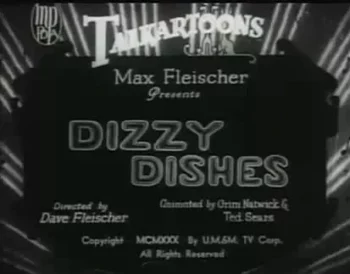
However, the star of the class might be the 1930 cartoon Dizzy Dishes, the debut of Betty Boop. Though not the most significant character to have had its original cartoon’s copyright expire, that would be Mickey Mouse, this may be the one that leads to a copyright fight.
That’s because, as Aaron Moss at Copyright Lately noted, the company that claims to own the character is laying the groundwork to continue to protect her after the ball drops on New Year’s Eve.
But, as Moss notes, there are many issues with that proposed protection, the biggest of which came up over a decade ago.
The Argument Against the Public Domain
Note: If you are interested in topics like this one, I highly recommend following Aaron Moss at Copyright Lately and subscribing to his newsletter.
Fleischer Studios, the company that licenses Betty Boop, has posted a page on its site entitled Fact Check 2026: Is Betty Boop in the Public Domain? The page features a letter from Mark Fleischer, the chairman and CEO of the company, explaining why, in their view, Betty Boop will not enter the public domain in 2026.
The main argument is fairly straightforward. They claim that the version of the character in Dizzy Dishes isn’t Betty Boop at all, but rather, is a “precursor” of the character. To that end, the Dizzy Dishes version is noticeably different. It features long dog ears and other canine features. She also features a large bow on her back and has other small stylistic changes. She also doesn’t have a name in this cartoon.
However, it’s still very easy to tell that this is Betty Boop. She has the trademark curled hair, short dress and sexpot demeanor.
That said, only this cartoon is entering the public domain. As such, only this version of the character will lapse. Much as we’ve seen with Mickey Mouse and Winnie the Pooh, the first appearance of the character entering the public domain doesn’t mean the whole character does.
Sherlock Holmes best illustrates this. As the character’s stories lapsed into the public domain over time, more and more of the character himself did too. Betty Boop will have something similar to this.
But according to Fleischer Studios, the very next year, she appeared in Silly Scandals as nearly human, and, in 1932, in the cartoon Any Rags, she lost the long ears completely, as they became her hoop earrings. According to the studio, by the end of 1932, “she appeared as the fully developed animated female character that we know and love today.”
Sherlock Holmes’ stories were published over 40 years, with many revelations appearing in the later stories. Though the character is now entirely in the public domain, it took decades to reach that point. For Betty Boop, at least according to the studio, it will take just two years.
However, that may not be the biggest problem Fleischer Studios faces. That is a 2011 ruling that found it doesn’t have an unbroken chain of ownership over the character.
A Broken Chain of Transfers
In 2006, Fleischer Studios filed a copyright infringement lawsuit against A.V.E.L.A. Inc. A.V.E.L.A. was a company that refurbished vintage art and, in this case, was selling restored Betty Boop art on shirts and other items.
A.V.E.L.A. argued that Fleischer Studios was not the valid owner of the work. Max Fleischer, the original creator of Betty Boop, sold his copyrights to Paramount in 1941. Fleischer Studios, founded by Max Fleischer’s heirs, claimed to have purchased the rights from Republic Pictures in 1997.
However, there were multiple transfers between Paramount and Republic Pictures. The biggest problem was the 1955 deal between Paramount and UM&M TV Corp. According to the Ninth Circuit in February 2011, “the purchase agreement explicitly provided that the right to the Betty Boop character copyright was retained by Paramount, rather than transferred to UM&M.”
With the chain of ownership broken, Fleischer Studios also argued that the shirts constituted trademark infringement. However, the court found that the use of the name “Betty Boop” was a functional Aesthetic component and that it didn’t use the name as a trademark. The court further noted that previous cases prevented the use of a trademark to protect an expired copyright.
In the end, the court ruled in favor of A.V.E.L.A.
Update: Aaron Moss points out that the court withdrew the trademark portion of this decision, leaving it unanswered. This was due to the Motion Picture Association of America filing a brief saying that the decision could threaten standard licensing practices.
This puts the Betty Boop character in a very strange place. Though the Ninth Circuit ruled in favor of the defendant, it wasn’t a completely resounding victory. First, it was a 2-1 decision, with a third judge saying that, even if the UM&M transfer wasn’t complete, another transfer, this one to Harvey Films, could give them a new chain of ownership.
However, since Fleischer Studios did not contest that on appeal, the majority decision didn’t address it. This leaves the door open to a different theory of ownership. That said, the district court found this theory faulty, but the studio chose not to appeal that decision to the Ninth Circuit.
Ultimately, this leaves the issue of ownership open enough to raise questions and, perhaps, discourage others from using it. But that may be the point.
Bottom Line
For me, this brings back memories of the fight over the song Happy Birthday to You. For many years, most experts felt that the song was in the public domain. However, Warner/Chappell Music collected royalties from it using a legal theory that maintained some plausibility.
It took a lawsuit to resolve the issue. However, in June 2016, Warner/Chappell Music abandoned its claims and agreed to pay back $14 million in licensing fees.
But with Betty Boop, this might be a moot point. Regardless of any claims Fleischer Studios may have to ownership, the iconic (human) version of the character will enter the public domain in just two years. Any lawsuit filed today wouldn’t likely conclude in time.
This leaves open the question of the trademarks. Mark Fleischer makes it clear that they hold multiple trademarks related to the character, and those do not expire. However, as the Ninth Circuit pointed out, that protection is extremely thin, as it can’t be used to enforce anything protected by copyright.
As the Ninth Circuit found in the A.V.E.L.A., the mere inclusion of the Betty Boop name on a work was a “functional aesthetic component” of the product, not a trademark.
However, as Aaron Moss pointed out in his post, “Campaigns like Fleischer’s ‘Fact Check’ often succeed not by winning in court, but by creating enough uncertainty to make creators think twice about pursuing new adaptations—and that may be the point.”
While that’s true, given the studio’s history, it still seems likely that we will see a legal battle over Betty Boop in the near future. Most likely, before January 1, 2028. Their position isn’t going to get any stronger over the next few years, and if a legal challenge is coming, it will likely come sooner rather than later.
Want to Reuse or Republish this Content?
If you want to feature this article in your site, classroom or elsewhere, just let us know! We usually grant permission within 24 hours.